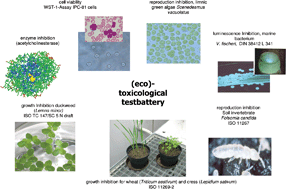
To enlarge the restricted knowledge about the hazard potentials of ionic liquids to man and the environment we have concentrated on analysing systematically the anion effect of six different anion moieties (Cl–, BF4–, (CF3SO2)2N–, (CF3)2N–, octylsulfate and bis(1,2-benzenediolato)borate) and the influence of the side chain length at the cation on (eco)toxicity. For our investigations, we used the flexible (eco)toxicological test battery considering aquatical and terrestrial compartments as well as different trophic levels including enzymes (acetylcholinesterase), mammalian cells (IPC-81), luminescent marine bacteria (Vibrio fischeri), limnic unicellular green algae (Scenedesmus vacuolatus), wheat (Triticum aestivum), cress (Lepidium sativum), duckweed (Lemna minor) and a soil invertebrate (the spring tail Folsomia candida). In general, the side chain effect was found consistently in all used test systems from the molecular up to the organismic level. Such a consistent response of the different test systems could not be confirmed for the tested anion moieties. Furthermore, in most of the investigated test systems the anion effects are not as distinct as the demonstrated side chain length effect. Nevertheless, for (CF3SO2)2N– a clear (eco)toxicological hazard potential is evident. Thus, the strategy to check toxicities within a flexible (eco)toxicological test battery has been proven to be effective for uncovering hazard potentials of ionic liquids.


 Please wait while we load your content...


